All Green Is Not the Same as Verified: Asset Compliance Beyond Spreadsheets
An all-green compliance register can look reassuring. But the colour of a cell is only useful when the status is supported by current, verified evidence.
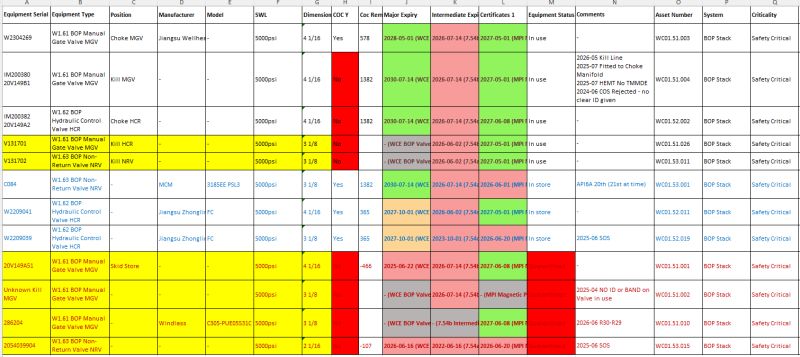
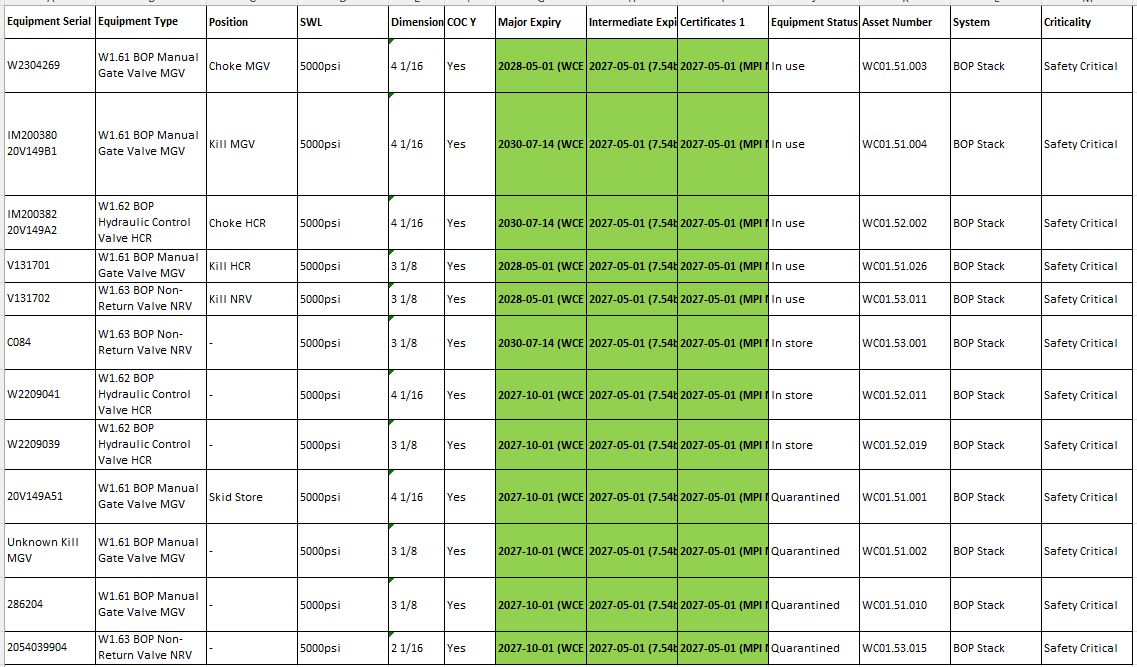
In the original LinkedIn post, Heimdall compared a download from a controlled cloud compliance tool with a rig-managed Excel register. The images present different pictures of the equipment records. The central question is not which report looks better, but which status can be traced back to reliable information.
A green cell is a claim, not the evidence
A status should connect to the asset it describes, the requirement being assessed and the documents or inspection records supporting it. Without those connections, a summary can conceal missing information, overdue work or uncertainty about whether a requirement has been met.
Manually maintained registers depend on disciplined updates, clear ownership and consistent interpretation. When those controls weaken, the report can become separated from the equipment and evidence it is intended to represent.
Know the gaps and own the actions
A visible gap gives the business something it can manage. Teams can investigate, verify the requirement, assign responsibility and track the action through to completion. A gap hidden behind a favourable status is much harder to address.
The objective should be an accurate picture of the assets, including uncertainty and outstanding work, rather than a presentation in which every item appears complete.
Build a single source of verified truth
Heimdall’s approach brings asset records, documents, inspections and supporting evidence together. Status information should be traceable, and changes should reflect verified records rather than an assumption that a green cell means the work has been done.
For crew, engineering teams and management, that means working from connected information and understanding what still needs attention.
Aim for ongoing audit readiness
Audit readiness is a continuing process: keep records current, review exceptions and maintain the evidence behind decisions. That gives the business a stronger basis for explaining its asset condition and compliance position whenever it is challenged.
The goal is confidence built on evidence. Know the gaps, own them and make the information useful for protecting the business, its people and its equipment.
The comparison images are reproduced from the original LinkedIn post. Use the link below to read that post in its original context.