HRAMS: From Asset Registers to Verified Asset Management
An asset register tells a business what it has recorded. Effective asset management goes further: it establishes what each asset is, where it belongs, which evidence supports it and how it will remain controlled throughout its lifecycle.
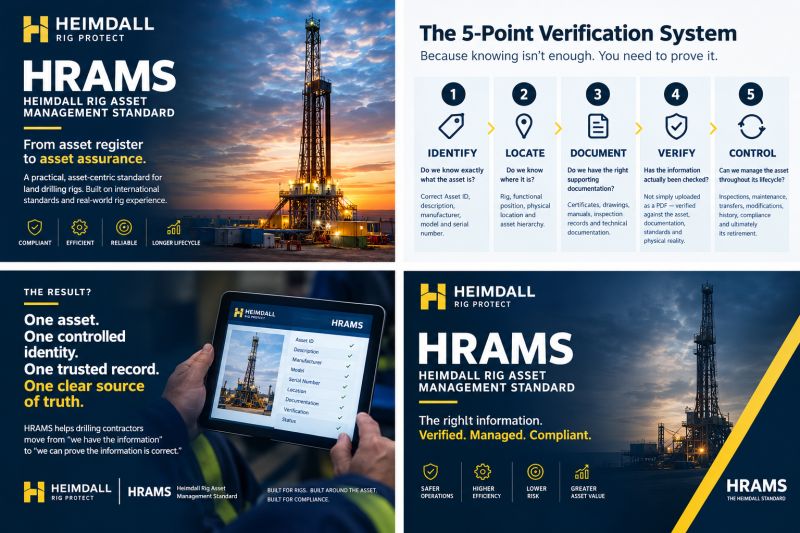
HRAMS — the Heimdall Rig Asset Management Standard — is Heimdall’s practical, asset-centric framework for land drilling rigs. It brings process and software together around a five-point verification system, drawing on rig experience, industry practice and relevant standards.
1. Identify — know exactly what the asset is
Establish a controlled asset identity, including the asset ID, description, manufacturer, model and serial number. A useful record should make it possible to distinguish the physical equipment from other similar items.
2. Locate — know where it is
Record the rig, functional position, physical location and place within the asset hierarchy. Connecting the equipment to its operating context helps teams understand where it belongs and maintain continuity when equipment moves.
3. Document — connect the supporting evidence
Bring together the certificates, drawings, manuals, inspection records and technical documentation that support the asset. The aim is to make the information accessible through the asset record, rather than dispersed across folders and disconnected registers.
4. Verify — check the information against reality
Uploading a PDF is not the same as verifying its contents. Check the record against the physical asset, the supporting documents and the applicable requirements, and keep discrepancies visible until they are resolved.
5. Control — manage the complete lifecycle
Maintain control through inspections, maintenance, transfers, modifications and changes in status. Preserve the asset history and supporting evidence as the equipment moves through its working life and ultimately reaches retirement.
From having information to being able to prove it
The five checks work together. Identification anchors the record; location supplies context; documentation provides evidence; verification checks accuracy; and lifecycle control keeps the information useful as circumstances change.
HRAMS is designed to help drilling contractors move from knowing that information may exist to being able to find it, explain it and demonstrate how it relates to the equipment.
The objective is one asset, one controlled identity and one trusted record, supported by a clear process for keeping it current.
Read the original HRAMS announcement using the LinkedIn link below, or request a demonstration to explore the approach.