Missing Documents, Lost Traceability and Hidden Financial Risk
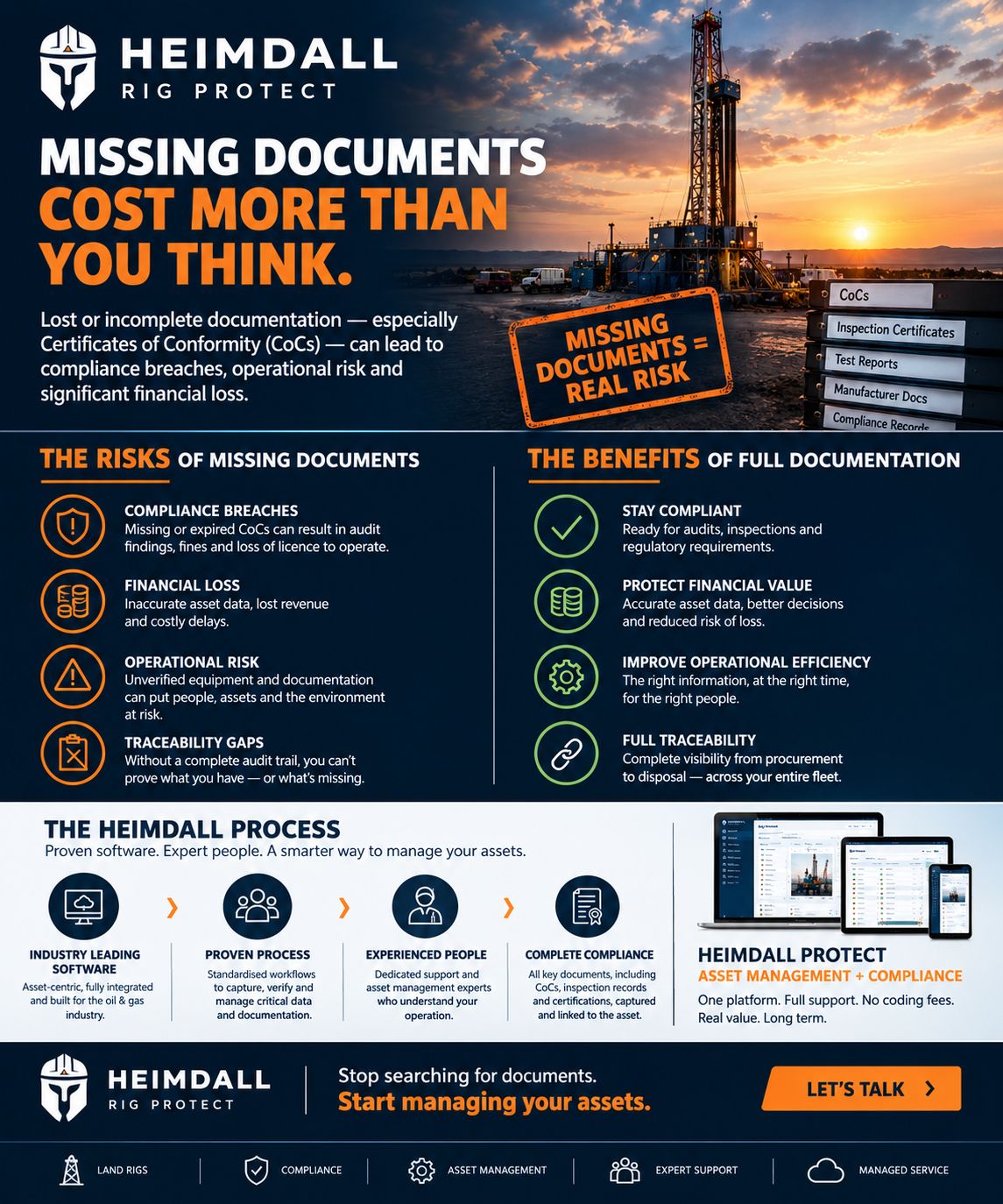
Missing asset documentation is rarely just an administrative inconvenience. In drilling and oilfield operations, gaps in the evidence can delay decisions, weaken traceability and reduce confidence in the equipment records the business relies on.
The issue is not simply whether a PDF exists somewhere. It is whether the right document is connected to the right physical asset, whether the identifying details agree and whether the supporting information has actually been checked.
Can you connect the certificate to the asset?
Take a Certificate of Conformity as an example. Can the team identify the equipment it covers? Does the serial number match? Has the document been verified, and is it current where applicable? Can it be retrieved when a client, auditor or workshop asks for it?
These questions connect document control with asset identity. A certificate stored in a shared folder is much less useful if the team cannot confidently explain which asset it belongs to.
Understand the consequences of missing evidence
Documentation gaps can create delays while records are located or checked. They can leave uncertainty over equipment identity, condition and history, and make it harder to explain the basis of a recorded compliance status.
They can also reduce confidence in the information used for commercial discussions and asset reporting. Reliable identity, history and supporting records help the business explain what it owns and the evidence available for it.
Collect, verify and maintain
A useful document-management process starts by capturing the evidence, matching it to the asset and checking the important details. It then needs clear ownership so the links and records remain accurate as equipment moves, changes or receives new inspections.
Uploading a document and verifying it are different activities. Maintaining traceability requires the relationship between the asset, its identity and its supporting evidence to remain understandable throughout the lifecycle.
The Heimdall approach
Heimdall combines asset-centric software, defined processes and experienced support to help capture, verify and maintain critical equipment information. The approach connects documents to the asset record and supports consistent data-quality work across locations.
The objective is better visibility of what information is available, what has been checked and which gaps still require action. That gives operational teams a clearer route to the evidence behind the record.
Protect confidence in the asset record
The goal is not simply to collect more documents. It is to know that the right document belongs to the right asset and to be able to demonstrate that connection when it matters.
Read the original LinkedIn post below, or contact Heimdall to discuss asset documentation and traceability across your fleet.