We Have SAP: Are Your Asset Compliance Outcomes Covered?
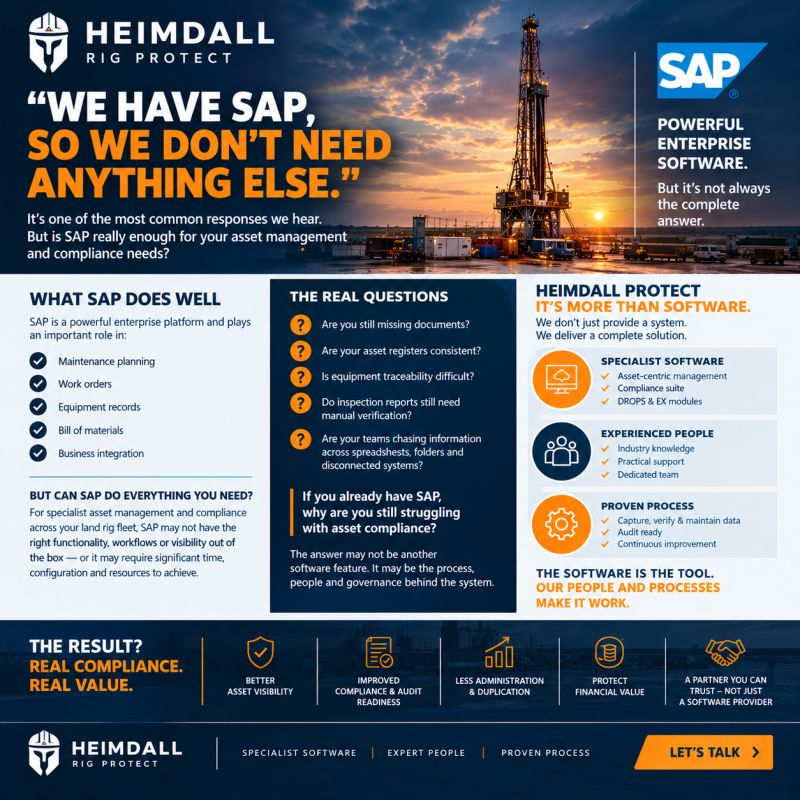
“We have SAP, so we don’t need anything else” is a familiar response when discussing asset management. The useful follow-up is whether the system, as configured and used by the business, is delivering the outcomes its teams need.
The original LinkedIn post recognises SAP’s role within the enterprise and asks a practical question: if asset compliance remains difficult, where are the gaps between the system, the information and the work happening in the field?
Start with the outcomes
Are supporting documents easy to find? Are asset registers consistent? Can teams trace equipment through movements and changes? Is inspection information verified and connected to the asset, or still held in separate reports, spreadsheets and folders?
These questions help distinguish between a capability that exists in principle and a process that is working consistently across the fleet.
Look beyond the software feature list
A feature cannot, on its own, establish ownership of the data, reconcile inconsistent records or ensure that evidence is checked. Configuration, resources, training and governance all affect the usefulness of the information the business gets from its systems.
The answer to an unresolved asset-management problem may therefore involve more than another screen or workflow. It may require clearer responsibilities, a controlled verification process and sustained support for the people doing the work.
The Heimdall approach
Heimdall brings together specialist asset-centric software, processes for capturing and verifying critical information, experienced people and ongoing support. The software provides the working environment; people and processes help keep the records and workflows useful over time.
For drilling operations, that means focusing on the practical connections between equipment identity, documentation, inspections, asset history and the evidence behind a recorded status.
Work alongside the existing enterprise system
The objective is to close operational gaps without creating another disconnected source of information. Where Heimdall is used alongside an existing enterprise platform, integration requirements and clear data ownership should form part of the solution design.
Teams need to understand which system owns each record, how changes are handled and how users reach the verified information they need. That is a process-design question as well as a software question.
Ask whether the process is delivering
Rather than asking only whether a system can support a function, ask whether it is configured, resourced and being used to deliver the required result. Reliable asset management depends on a process that works, people who understand it and information the business can trust.
Read the original LinkedIn post below, or contact Heimdall to discuss the asset compliance gaps your teams are trying to close.