You Buy the Software. Who Manages It?
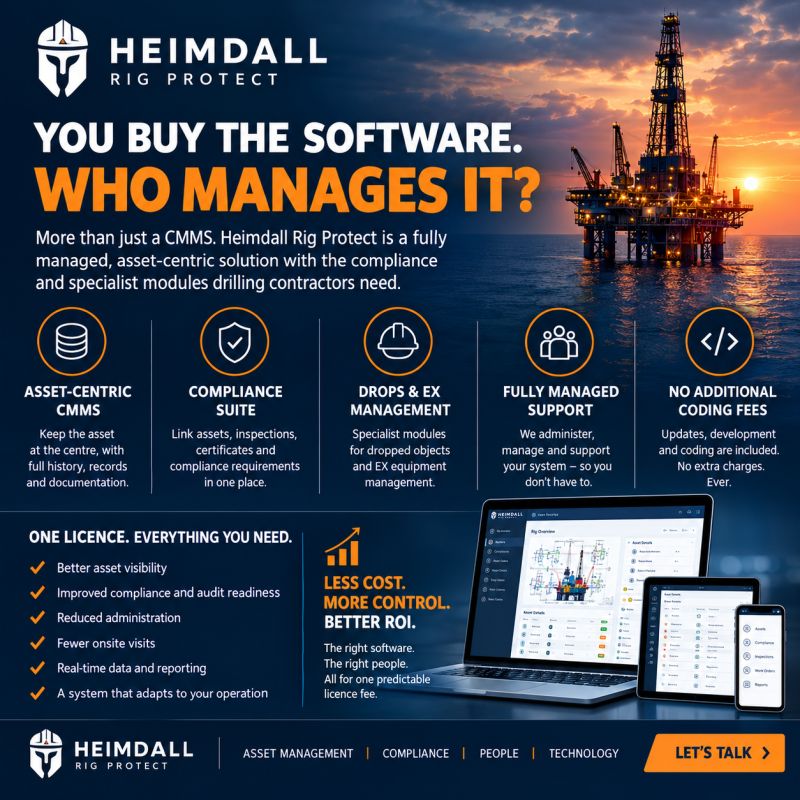
Buying a CMMS gives a business access to software. It does not automatically answer who will administer it, maintain the information, support the users or keep the workflows useful as operational needs change.
Those responsibilities continue after implementation. When they are left unclear, a system intended to make asset management easier can become another task for an already busy team.
Keep the asset at the centre
Heimdall Rig Protect brings together asset-centric maintenance management and compliance tools. Equipment history, records and supporting documentation are connected to the asset so users can reach the information in its operational context.
The approach combines a CMMS, a dedicated compliance suite and specialist modules for drilling requirements, including dropped-object prevention (DROPS) and EX equipment management.
Ask what happens after implementation
A software review should cover more than the licence and the initial setup. Who manages the system day to day? Who helps maintain the process? Who supports changes when the operation needs a different workflow or additional functionality?
Clear answers help the business understand the ongoing work required to keep its system useful and the resources needed to do it.
A managed approach to support and administration
Heimdall combines the platform with ongoing administration and practical support. The aim is to help maintain the working system, support users and preserve continuity as equipment, requirements and personnel change.
Rather than treating implementation as the finish line, the managed approach keeps attention on the processes and information that allow the platform to deliver value over time.
Development included within the offering
The original LinkedIn post sets out Heimdall’s offering of included updates, development and coding, with no additional coding fees under that offering. That makes ongoing adaptability part of the conversation when evaluating the system.
For a business considering a change, the useful questions are what support is included, how development requirements are handled and how the platform will continue to fit the operation.
Bring asset management and compliance together
An integrated approach connects asset records, inspection information and supporting documentation rather than leaving teams to reconcile disconnected spreadsheets, databases and folders.
The objective is less software administration for the operational team, clearer asset visibility and a more consistent process for maintaining the information the business needs.
If you are reviewing your CMMS or the ongoing work involved in keeping it fit for purpose, explore the original LinkedIn post below or contact Heimdall to discuss a managed approach.